carbonioKeep it real
Carbon Valley · the farm
Est. 2026 · purveyors of organic marketing

Carbon Valley Farms

Grown, not generated · Free-range humans · No artificial slop

Marketing content is food, and the industry is running a factory that extrudes it by the thousand: same shape, same beige, engineered to be swallowed without chewing. Carbon Valley Farms is how everything here gets made. Real ingredients, in season, small batches, on a farm you’re welcome to walk.

Silicon Valley runs on output. Carbon Valley grows things people actually want. Same tools, opposite religion.

The vocabulary problem · eight badges, no winner

Food got the word organic. Nobody has won the one for this yet.

First, a clarification, because we are a marketing company standing on a farm. In this industry organic already means something exact: reach you did not pay the platform for. That is the trade definition, it is fine, and we are not redefining it to suit ourselves. Bending a live industry word toward your own pitch is the thing this whole site complains about.

We use organic the way a grocery store uses it. A metaphor, borrowed on purpose, because food is the one place this argument has already been won.

And the borrowing exposes the real problem. Food has a vocabulary. Organic, grass-fed, single origin. Words with rules behind them that a shopper can act on in two seconds without trusting anybody.

Work made by a person has no such word, and it is not for lack of trying. There are currently at least eight competing certifications racing to become it, from free downloadable badges with no auditing at all to paid manuscript reviews. Faber printed “Human Written” on the cover of Sarah Hall’s novel Helm, at the author’s own request, which is the most credible use of any of them so far.

Eight claimants is not a category with a word. It is a category still arguing about one.

Meanwhile the opposite problem is being solved on a deadline. The EU’s transparency rules for AI-generated content take effect in August 2026, with a harmonised icon so people can recognise machine output on sight. Every large platform already labels it. The negative space is getting a legally mandated mark. The positive space is getting eight logos and an argument.

What we mean when we say it

Grown from a real position, by somebody who was actually there, with nothing added to make it taste like something it is not.

Three tests, all of which have to pass. It began with a human noticing something true. A person with a name made the final call. It carries no artificial flavour, nothing bolted on to imitate a feeling it did not earn.

So we are not printing a badge

A logo you can download and display without anybody checking is worth exactly what it costs to fake. We would rather be the proof: named work, named competitors, the corners checked in public, and every round shown including the wrong ones.

When somebody lands a word that actually means something, we will use theirs.

How organic actually got its meaning

The word was coined in 1940. Farmers built the first American certifier in 1973. Congress passed the law in 1990 and it took effect in 2002. Sixty-two years from a word to a rule somebody could enforce, and the word was worth nothing commercially until that last part.

And who did it

A movement, then a co-op of farmers, then a government. No single company has ever minted a trust label the market adopted, and anybody telling you they are about to is selling you the ninth badge.

The part nobody has solved · and may not

Here is the genuinely mad part. None of this can be proven.

Take any piece of work and try to establish whether a machine touched it. Go on. There is no test you can run that settles it.

Detection does not work. OpenAI built a classifier to spot its own model’s output and withdrew it in 2023 for being too inaccurate to use. The company with the most reason to solve it, and the most information to solve it with, gave up on the problem publicly.

The badges do not solve it either, because almost all of them are self-declared. You tick a box and download a logo. Nobody visits. Nobody audits. A certification that anybody can award themselves is a certification of nothing, and the people most willing to award it to themselves are the ones you would least want it from.

Provenance tracking is the most serious attempt, and it only records what a cooperating tool agreed to record. Strip the metadata, screenshot the file, use software that never signed up, and the trail is gone. It proves what happened when someone chose to be traceable, which is useful, and is not the same as proof.

So the entire trust structure being built right now rests on people telling the truth about themselves.

Which is roughly where we came in. You cannot verify this from the outside, so you are back to judging the same way you judge anything else you cannot audit: by what somebody does when it would be easier not to, and whether they will put their name on it.

So here is the word we use

AI-assisted.

Not AI-free, because that would be a lie and an unfalsifiable one. Not human-made, because the phrase has no agreed meaning and eight organisations are still fighting over it.

Assisted. A machine helps. A person decides, signs, and is answerable for it. That is the true description of how this work gets made, and it is the only claim here that would survive somebody checking.

It has been the first line of this website the whole time. Go back to the top of the home page and read the small print above the headline. We picked the honest word before we had the argument for it.

The pattern · why food, why now

Winning is easy. Just reject the degeneration of culture.

Food went from grown, to processed, to “why do I feel terrible,” and back to real ingredients. Content is on the same ride, and your audience can already taste the difference.

Every stage of that ride ended the same way: people walking back toward the farm stand, happy to pay more, for less, made properly. The full chart lives on the FAQ page.

We opened the farm stand early, on purpose.
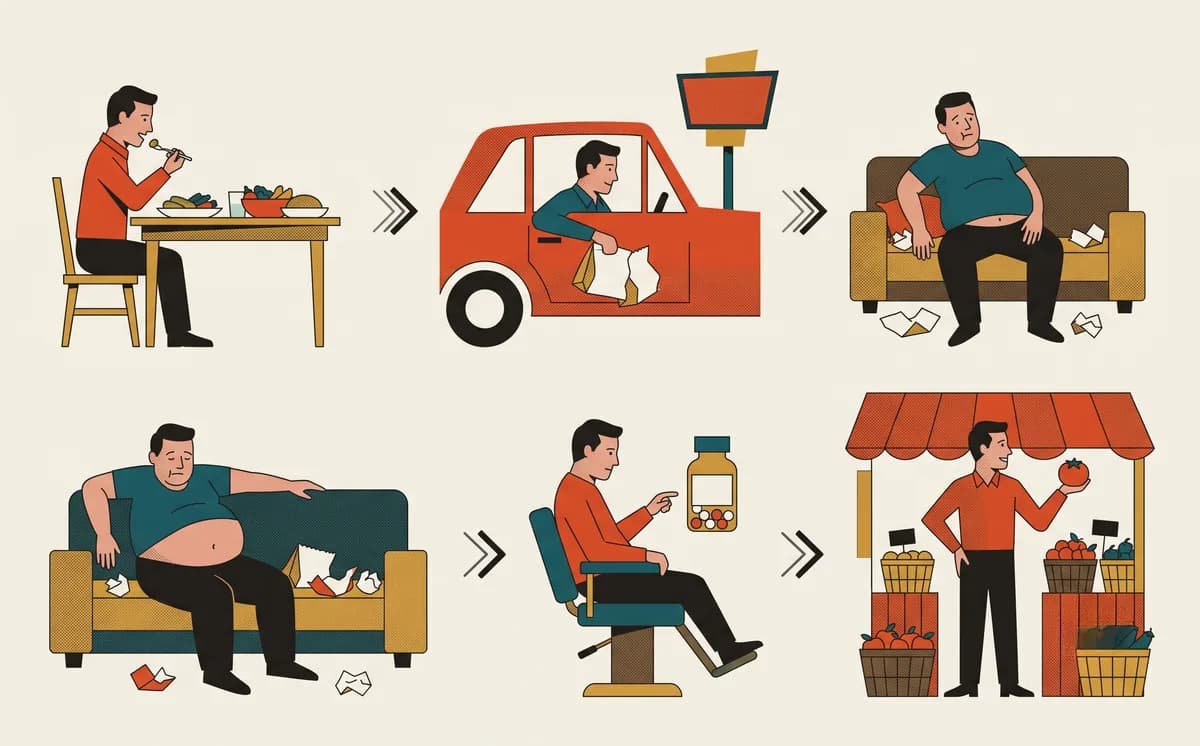
A six-panel frieze following the same man from a home-cooked meal to the drive-thru, to the couch, to the clinic pill bottle, and back to a farm stand holding one ripe tomato
The crop · what is grown here

Four rows, worked all year.

A farm is defined by what comes out of the ground. Here is the field map.

Words
Row 01

Site copy, emails, ad scripts, posts. Grown from an owner's real story and read aloud until they sound like a person talking.

Pictures
Row 02

Art with a decade, a style, an emotion, and one message to carry. Nothing gets planted because the machine offered it first.

Jokes
Row 03

The hardest crop here. Comedy lands or it dies in the field, and there is no partial credit for one that almost worked.

Systems
Row 04

Sites, sequences, dashboards. The irrigation. Dull to look at, and the reason everything else survives August.

Every row sits on the services menu under a duller name.
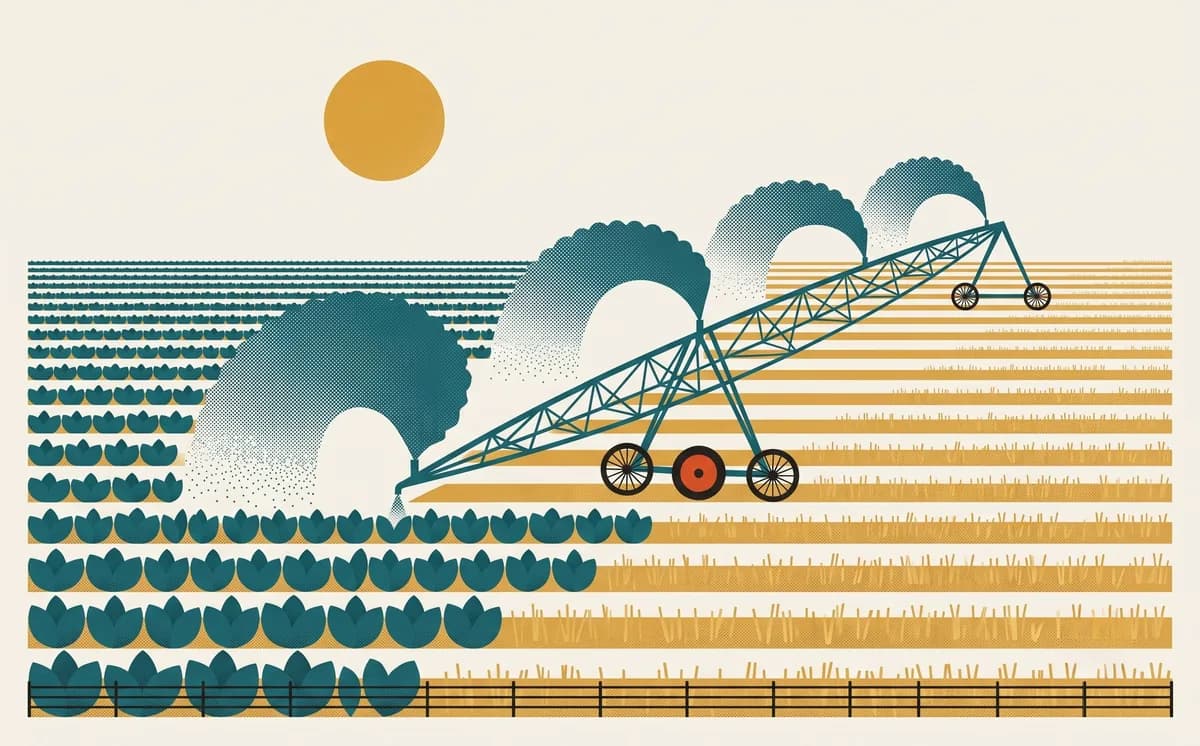
A center-pivot irrigation arm of teal lattice rolls across a field, fans of water falling, dusty ochre stubble turning to plump teal crop rows behind it under a mustard sun
Row four. Nobody photographs the irrigation.
The soil · where flavor comes from

Every farm is really an argument about dirt.

Ask a grower why their tomatoes taste like that and they’ll talk about soil long before tomatoes. Ours is your identity: the real story, and the opinions you hold that your competitors would never put in print.

We dig it out in the deep dive and write it down on paper, off anybody’s servers, owned by you. Every word, ad and image this farm ships gets grown in it.

Thin soil grows thin food. A shop that skips this step is farming a parking lot, which is why a thousand competitors’ websites all read like one website.

Soil sample · what we test for

The origin story, in the owner's own words

What you refuse to do, and why

The customer you'd fire

The joke only your industry gets

The thing you're right about that sounds wrong

None of it is on the internet. That is the point.

The season · how the year runs

Small batch, in season, on a real clock.

Nothing worth eating is available in unlimited quantity, year round, at whatever hour you feel like ordering it.

Sow · weeks one and two

The deep dive. Your story, your angles, your spice level, and the people you would happily argue with in public.

Tend · every week

Drafts, kills, rewrites. Most of what gets planted never leaves the field, and that is the job working correctly.

Harvest · weekly

What ships is what survived. A cadence you can keep beats a heroic month followed by silence.

Rotate · quarterly

Angles wear out the way ground does. We rest what is spent and plant something else in it.

Three client slots at a time. When the farm is full, it is full.

Do we use AI? Hell yes.

“Wait. You use AI… but still bash it?”

Hold up, cowboy. Whether settled itself years ago. How is the entire question, and a farm answers it in two objects:

The tractor

Even certified-organic tomatoes ship on tractors. Efficiency was never the enemy. The tractor pulls; the farmer still decides where the furrow goes.
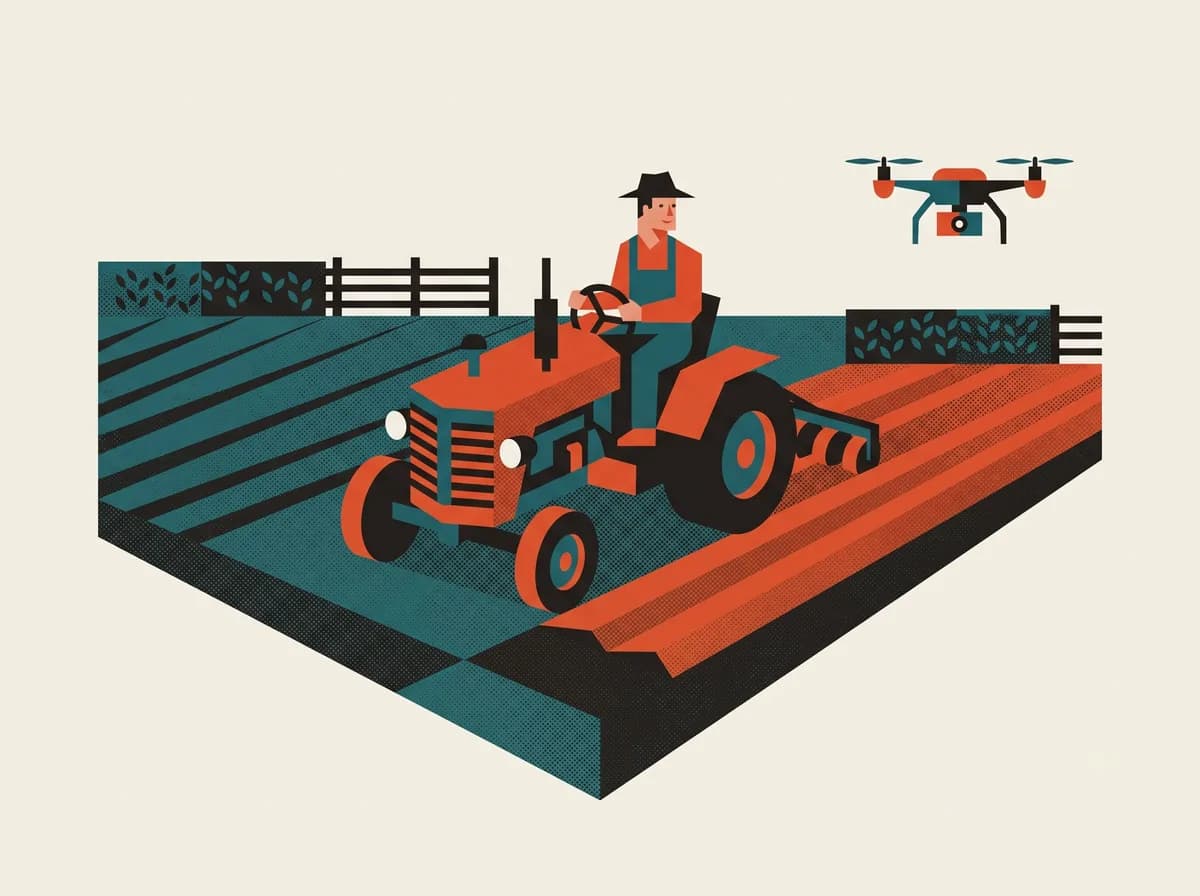
A farmer drives an honest little tractor cutting clean furrows while a small delivery drone waits politely at the field's edge
The additive

What makes it organic is what the farm won’tput in the jar. A dumbass Yeti commercial? That’s Red 40 in the watermelons, sold as organic farming, lol. (Exhibit C on the homepage. It really happened.)
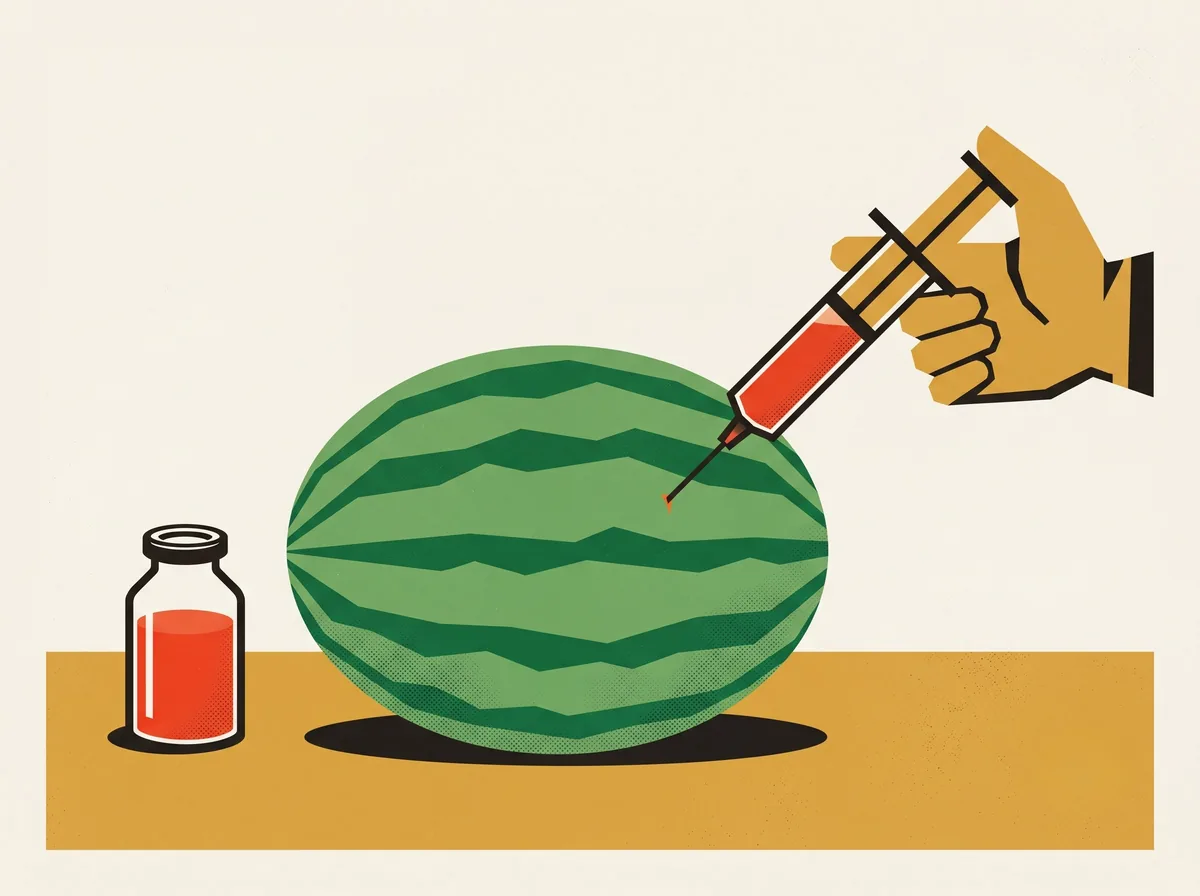
A gloved hand pushes a large syringe of vivid red liquid into a whole striped watermelon, a small bottle of the same red liquid beside it

We use AI like the tractor, never like the additive. The machine speeds up the work; it never becomes the work. No slop in the jar.

And yes: you use the tool of your oppressors. (The full sermon lives on the FAQ page.)

The certification · what the seal would have to mean

Nobody inspects marketing. So here is the audit we’d have to pass.

No agency checks content for filler. If one turned up with a clipboard, five things.

  1. 01Every published word read aloud by a human before it ships.
  2. 02Nothing leaves the farm on the machine's first pass. Ever.
  3. 03The tools disclosed in plain language, any time somebody asks.
  4. 04Your identity written on paper, owned by you, portable the day you fire us.
  5. 05Corners checked out loud, our own included, and whatever we catch published.

Self-issued. Ask for the checklist and audit us against it.

A seal a farm prints for itself is worth roughly what you’d expect, which is why every line above is checkable. Ask what tool touched a draft. Ask what we caught ourselves doing wrong last month. Answers arrive the same day, or the seal comes down.

For SEO purposes

The questions people ask at the gate.

What's Carbon Valley?

Our side of the tech world. Silicon Valley bet everything on element 14: output, scale, optimization, and the slop that follows. Carbon Valley runs on element 6, the one that's actually alive. It creates with discernment, ships jokes that land, and reads your customers like people instead of spreadsheet rows. Same tools, opposite religion: the machine serves the human, never the reverse.

Do you actually use AI?

Constantly, and I will never lie to you about it. This is AI-assisted marketing, said out loud. The machine is the hands; I am the ear.

Every output gets reviewed, corrected, and frequently rejected by a human who came up as a senior copywriter. I even edit the machine's own instructions when it drifts toward sameness. What you will never get from me is unreviewed slop with your logo on it.

How do you justify using the tool you criticize?

Yeah: you use the tool of your oppressors. That's been the move since antiquity. David finished Goliath with Goliath's own sword. Sarah Connor's best soldier was a reprogrammed Terminator. Neo fought the Matrix from inside the Matrix. When a weapon is pointed at everything you love, you don't boycott the weapon. You learn it, you turn it, and you point it back.

Why do you keep comparing marketing to cooking?

Because Italian cooking already solved this argument. Cacio e pepe is pasta, pecorino, black pepper, and starchy water: three ingredients, and if you don't know exactly when the cheese meets the water you get a clumped, greasy mess. The recipe is public and the dish still separates cooks from chefs. AI handed a fully stocked kitchen (every ingredient, every gadget) to millions of people who have never cooked, and the plates are coming back loud, beige, and inedible. A fully stocked kitchen never made anyone a chef. We cook the Italian way: fewer ingredients, obsessive quality, technique you can't fake. The name on the door is Italian. The citizenship too. The metaphor was inevitable.

Read the full FAQ

Marketing Facts · read the label

Nutrition Facts

A nutrition label: what’s inside, by percentage. You need all three. Most companies are quietly starving one of them, and it is almost never the one they think.
Marketing Facts
Serving size: 1 business
Amount per business% daily value
Protein Structure40%
Carbs Energy35%
Fat Flavor25%
Slop 0%. Filler 0g. Synergy 0mg. Contains real humans. May contain traces of jokes.
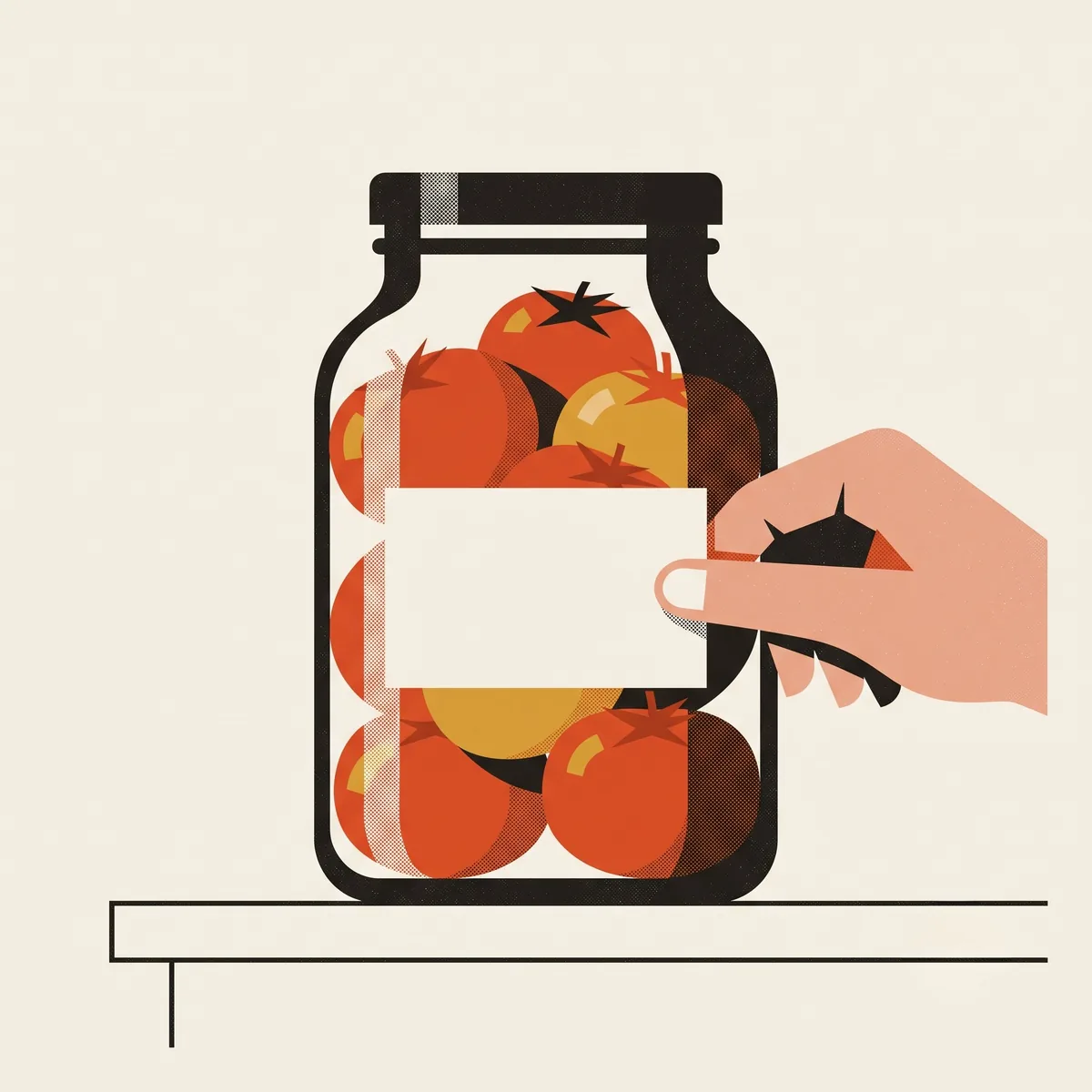
A hand presses a plain blank label onto a glass jar packed with ripe tomatoes

How to read it.

Food labels work because the numbers are comparable and the small print is where the lying used to happen. Same idea here. Three macros, one honest split, and the fine print on the front of the box.

Serving size
One whole business, every channel it runs. Scale the budget up or down and the ratio holds.
Servings per container
Ongoing. Marketing behaves like a diet, which is why the six-week sprint you bought in 2022 wore off by August.
Percent daily value
The share of your total effort each macro should carry. Treat it as the starting split, then we adjust it once we see what you already have.
01 · 40% of the plate

Protein

Structure

The site that loads, the emails that send, the pages that rank. Expensive to live without.

The load-bearing half. A site that loads fast and says something true, email that lands in the inbox instead of the promotions bin, pages that rank on Google and get quoted by the answer engines.

Every other macro sends a stranger somewhere. Structure is the somewhere. Skip it and you are buying attention wholesale, then dumping it on the floor.

Deficiency · what it looks like

Traffic with nothing to do. Good posts pointing at a six-second homepage that reads like a brochure from 2014. Leads that go cold because nothing follows up while the interest is still warm.

Overdose · also a real thing

A technically flawless site nobody visits. All skeleton, no pulse.

02 · 35% of the plate

Carbs

Energy

Posting, replying, showing up in front of humans this week, not next quarter.

Showing up. Posting, replying, publishing, talking. The work that happens this week rather than in the quarterly plan somebody keeps rescheduling.

Attention decays on a clock. A company heard from once a season is a company forgotten in between, and the forgetting is total. Energy keeps the structure warm enough to be worth landing on.

Deficiency · what it looks like

A gorgeous site with a blog last touched in 2023, three logo posts on Instagram, and an owner who says we really should post more about twice a year.

Overdose · also a real thing

Daily output nobody remembers. Volume with no spine under it, which is how a feed turns into wallpaper.

03 · 25% of the plate

Fat

Flavor

Comedy, video, and memes that sound like a person and make strangers actually laugh.

Comedy, video, memes, the angle nobody else took. The quarter of the plate with a personality attached to it, and the only quarter a machine cannot average its way into.

Structure gets you found and energy gets you seen. Flavor is the reason a stranger stops, remembers on Thursday what they saw on Monday, and sends it to somebody else.

Deficiency · what it looks like

The most common deficiency by a mile, and the hardest to spot from inside. Correct, professional, forgettable: copy that would still make sense with a competitor's logo pasted on top.

Overdose · also a real thing

Jokes that sell nothing. Funny is a delivery vehicle, and it still has to arrive somewhere with a price on it.

The back of the box

Ingredients, in order of quantity.

Human judgment. Your actual business, learned properly in the deep dive. Storytelling, interviewed out of an owner rather than invented. Machine assistance, used like a tractor and never like an additive. Research. Revision. One person who reads every word before it ships.

That last ingredient is the whole product, and it is the one the exhibits on the homepage show other shops quietly leaving out.

Allergen statement

CONTAINS: real humans, strong opinions, occasional profanity, named competitors.

MAY CONTAIN TRACES OF: jokes.

FREE FROM: filler, synergy, unreviewed machine output, and the word leverage.

Not evaluated by any agency that stacks content to the moon.

Come walk the rows.

One call. Tell us what you’re growing and we’ll tell you, honestly, what we’d plant for it. No invoice for the conversation.

Grown, not generated · Free-range humans · No artificial slop